My Family Said They Didn’t Need My Help—So I Stopped Helping
Part 1
The first time I remember cooking dinner, I had to stand on a chair.
I was nine, my feet sticking to the vinyl seat because I’d spilled orange juice earlier and hadn’t had time to clean it up. I stirred boxed mac and cheese with one hand and kept an eye on the clock with the other because Tara needed her inhaler at seven and Kian would start asking about food at exactly six-thirty like his stomach had an alarm.
Mom wasn’t home. She was rarely home, not in the way a mother is supposed to be home. Sometimes she’d come in laughing too loud, smelling like perfume and something sharp, and she’d kiss the top of my head like she’d done something heroic by remembering we existed.
“Good job, Jazz,” she’d say, like I was a coworker, not her kid.
That was how my childhood ended: not with a dramatic scene, but with a pot of boiling water, a chair, and the understanding that if I didn’t do it, nobody would.
So when my mother slid an iPad across the kitchen counter nine years later like it was a legal deposition, I almost laughed.
The kitchen was brighter than usual that morning, sunlight bouncing off the granite we’d gotten when Mom decided we needed “a fresh vibe” after her last breakup. The countertops looked fancy. The rest of the house didn’t. There were always crumbs in the couch, always a mystery smell in the hallway, always laundry in a heap somewhere that only moved when I moved it.
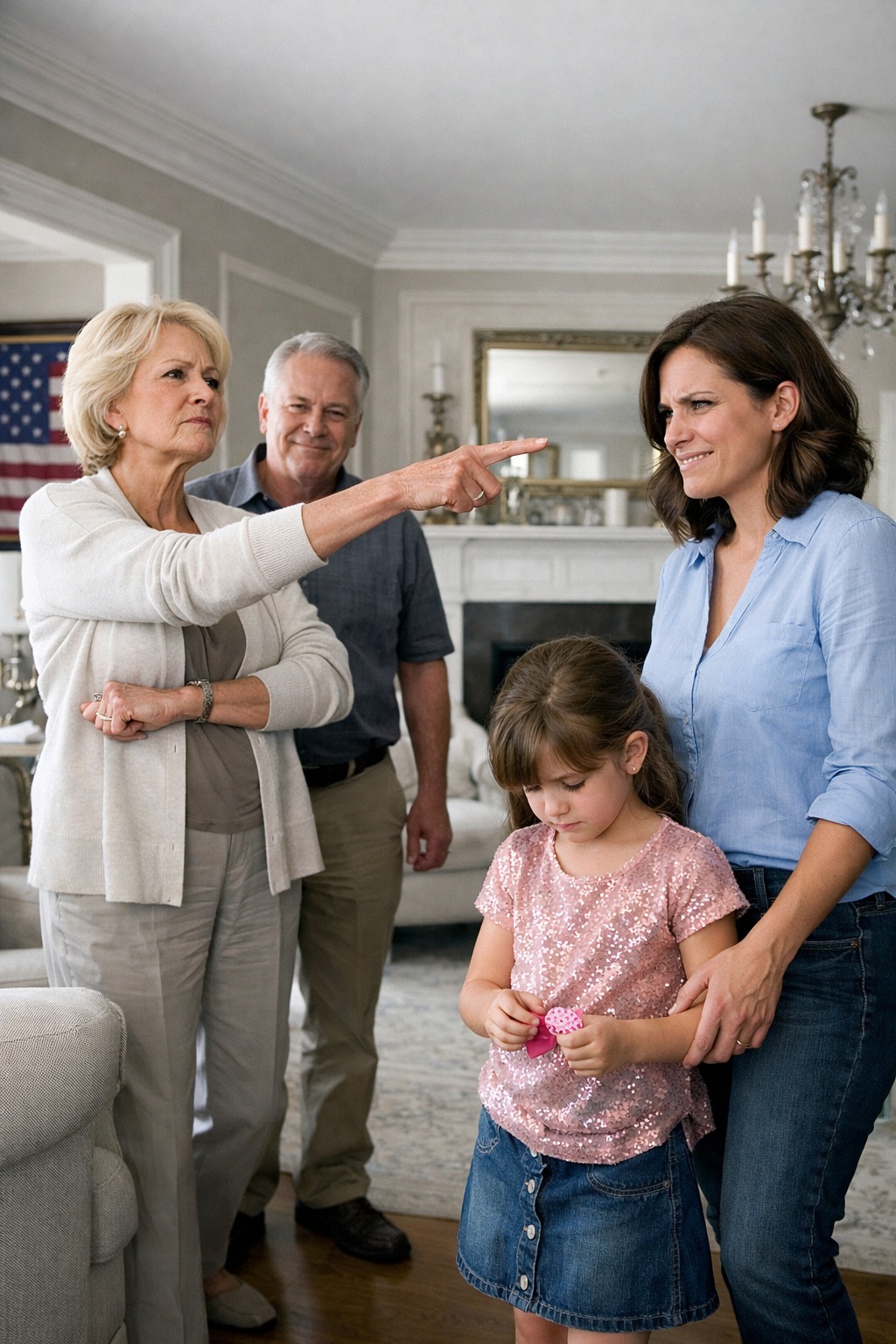
Mom’s nails tapped the screen. “We’re sick of you making everything about yourself,” she announced.
Tara and Kian stood behind her like backup singers in a bad reality show. Tara had her arms crossed, chin high. Kian’s expression was something between bored and smug, like he already had a group chat drafted about my “meltdown.”
Mom pointed at the document open on the iPad. “This binds you to sibling duties only. No more pretending to be their mother. Sign it.”
I stared at the screen. The words were typed in tidy little bullet points like someone had taken my life and turned it into a contract.
SIBLING DUTIES ONLY.
No waking them up.
No preparing meals.
No laundry.
No school communication.
No transportation.
No financial management.
No medical scheduling.
No discipline.
No “parenting behavior.”
At the bottom was a signature line with my name already typed in, like she’d decided the story before I’d read the page.
“You’re not that important, Jasmine,” Tara said. She was fourteen and had perfected the tone teenagers use when they want to sound older than you but still need someone to buy their toothpaste. “Nobody asked you to do all this.”
Kian nodded like a judge. “Yeah. You act like you’re some kind of martyr.”
The irony was so thick it felt like humidity.
Because they were right about one thing: nobody asked.
I did it because the alternative was Tara crying in a bathroom with blood on her underwear and no idea what was happening. I did it because Kian would wear the same shirt for a week if nobody told him deodorant existed. I did it because Mom forgot bills had due dates and thought permission slips were optional.
I did it because if I didn’t, we would fall apart. We had fallen apart before. I’d spent too many nights listening to Tara’s wheezing through the wall, too many mornings rummaging for cereal like it was treasure, too many afternoons forging Mom’s signature because the field trip fee was due and she was “busy.”
Last week, Mom had cornered me in the hallway and asked, casually, “So when’s Tara finally gonna become a woman?”
Tara had gotten her period three years ago. Mom hadn’t noticed.
I looked up from the iPad and met each of their eyes. Mom’s was impatient, sharp with something that might’ve been guilt if she still had access to it. Tara’s was defiant. Kian’s was almost gleeful.
For a second, I considered fighting. I could argue, list every meal, every load of laundry, every night I’d stayed up helping with homework while my own assignments piled up. I could remind Mom that I’d bought her that iPad so she could FaceTime her boyfriends and online-shop while I paid the electric bill through her email.
I could do all that.
But I’d been the responsible one for nine years. And I was tired.
So I picked up the stylus, scrolled to the bottom, and signed with a smile.
“Well,” I said, bright as a morning show host, “why didn’t you just say so?”
Mom’s shoulders loosened like she’d been holding her breath. Tara and Kian exchanged a look—victory, pure and sparkling.
“If you want me to be a sister,” I continued, “then a sister is what you’ll get.”
They grinned like they’d won the lottery.
The next morning, I woke up to my mother’s victory lap.
“Everything’s already so much better,” she told someone on speakerphone—her new boyfriend, judging by the breathy laugh she never used on us. “Should’ve put my foot down years ago. It was like living under a Jasmine dictatorship.”
I lay in my bed staring at the ceiling, listening to her narrate my demotion like a motivational podcast.
In the kitchen, Tara floated in wearing the outfit I’d laid out the night before out of habit. Kian grabbed a lunch from the fridge—the ones I’d meal-prepped on Sunday, because even dictators plan ahead, apparently.
“This is how a real family works,” Mom announced loudly, like the house was an audience. “Not the Jasmine show.”
I made myself sit up, stretch, and take a deep breath.
Okay.
A sister, then.
I got dressed slowly, put on lip gloss for no reason, and walked past the kitchen without touching a single dish.
Mom blinked at me. “You’re not making breakfast?”
I pulled my phone out, tapped the photo of the agreement I’d already saved, and held it up like a badge. “Sister duties only.”
Tara frowned. “What does that even mean?”
“It means,” I said, sliding my backpack on, “you’re about to learn how much I’ve been doing.”
I walked out the door and didn’t look back.
For the first time in nine years, my day didn’t begin with someone else’s needs.
It began with mine.
And I decided my first act as a regular, unimportant sister was going to be Starbucks.
Part 2
Starbucks at eight in the morning feels different when you’re not rushing.
Usually, I grabbed coffee like it was medicine—something to keep me upright while I herded my siblings out the door, packed lunches, found missing shoes, and reminded Mom that yes, bills were real and no, “I’ll do it later” didn’t keep the lights on.
But that Monday, I stood in line and actually read the menu like I had time.
I ordered a breakfast sandwich, a ridiculously expensive iced drink, and one of those little egg bite things people on TikTok acted like was life-changing. I even bought one of those metal ice rollers from a nearby pharmacy because I’d seen the trend and, for once, I wanted to do something because it was fun, not because it was necessary.
I sat by the window and watched other people move through their morning routines—parents with toddlers, college kids half asleep, a guy in scrubs sipping espresso like he’d just survived a night shift.
Nobody looked like they were parenting their whole household at eighteen.
My phone buzzed three times while I ate. Mom. I ignored it.
By the time I strolled into school, the day already felt like a secret.
At lunch, Tara’s friend Mia stared at Tara’s clothes like she’d spotted a wild animal.
“Did you… sleep in that?” Mia asked.
Tara’s cheeks flared red. Her hair was pulled into a messy knot and her shirt had a faint stain near the collar, like she’d missed her mouth while eating something.
“It’s a style,” Tara snapped.
I sat down across from them with my tray and kept my face neutral. Tara shot me a look that said fix it, like my hands were still tied to her life.
I took a bite of my sandwich. “What?”
Tara’s nostrils flared. “Mom forgot to do laundry.”
I shrugged. “Sounds like a mom problem.”
At the end of the day, the real consequences started rolling in like a slow-motion disaster.
Kian missed his first-period exam because nobody woke him up. He tried to play it off like it was no big deal, but his teacher didn’t do makeups for “I overslept,” and his grade dropped hard enough that he came home slamming doors.
Tara didn’t have lunch money because Mom didn’t know the lunch account existed. Tara ate two packs of crackers someone gave her and came home hungry in a way I recognized.
Mom got written up at work for being two hours late because she didn’t know “morning routine” meant more than yelling “Get up!” from the hallway.
By Thursday, the house told its own story.
I opened the front door and the smell hit me first—old food, sweaty fabric, the sour tang of trash that hadn’t been taken out.
The sink was stacked with dishes like a sculpture. A fuzzy green film had started blooming on one plate like science class. The trash bags by the back door were swollen and leaking. Flies hovered like they’d paid rent.
Kian walked past me wearing his PE uniform, not in an “I just got back from the gym” way, but in a “this is now my everyday clothing” way.
“Hey, Jazz,” he said casually, like we were cool. “Quick favor. Can you grab me some deodorant when you’re out?”
I stopped in the hallway and turned slowly. “Sorry,” I said, sweet as syrup, “that sounds like overstepping my sibling boundaries.”
Kian blinked. “What?”
I pulled up the agreement on my phone and waved it. “Shopping for you sounds like mothering. We can’t have that.”
He rolled his eyes. “Come on, sis. Don’t be petty.”
“Petty?” I repeated. “This is literally what you asked for.”
He muttered something about me being dramatic and stomped upstairs.
The smell followed him. It followed him for another week.
Saturday was Tara’s orchestra recital.
I’d been looking forward to it in the way you look forward to proof that your effort mattered. I’d been washing her concert dress carefully, hanging it to dry, taking it to the dry cleaner when it needed it. I’d pressed it the night before every recital. I’d pinned her hair back, tied her shoes, told her she looked beautiful even when she rolled her eyes.
That Saturday, I sat in the audience with my hands folded in my lap and watched Tara walk on stage in a wrinkled, stained dress—the fancy one, but treated like it was just another piece of fabric.
Parents whispered. Kids pointed. Tara’s shoulders hunched like she could feel the eyes burning her skin.
When the music ended and the applause came, it sounded thinner than usual. Tara’s smile trembled as she bowed.
Afterward, in the lobby, her teacher—a kind woman named Ms. Alvarez—approached Mom with that careful expression adults use when they want to say something but don’t want to start a fight in public.
“Mrs. Williams,” Ms. Alvarez began gently, “I wanted to check in about the dress code. Tara’s outfit today—”
Mom’s face tightened. “She’s fine.”
I stepped closer before I could talk myself out of it.
“Oh, we had a family restructuring,” I said cheerfully, loud enough that two nearby parents turned their heads. “I was overstepping by handling her concert clothes. So now Mom’s in charge for the first time ever. Isn’t that right, Mom?”
Mom went pale, like the blood had drained straight into the floor.
Ms. Alvarez’s eyebrows lifted. “A family restructuring?”
“Yep.” I tapped my phone and pulled up the agreement. “She made me sign a contract. I’m not allowed to fill in as their mother anymore. Just a sister. No more Jasmine dictatorship.”
Ms. Alvarez’s expression shifted from confused to concerned in about two seconds.
Tara’s face crumpled. She spun and bolted toward the bathroom, shoulders shaking.
Mom stood frozen, surrounded by parents whose looks had sharpened into judgment.
In the car on the way home, Mom hissed, “How dare you embarrass me?”
I stared out the window. “How dare I tell the truth?”
Wednesday afternoon, my phone rang. The number was the school’s.
“Jasmine?” a warm voice said. “This is Mrs. Peterson, the guidance counselor. I’m calling about some concerns regarding your siblings’ welfare.”
I leaned back against my bed, phone pressed to my ear. “They have a mother.”
There was a pause. “Multiple teachers have reported—”
“I have no authority over my siblings,” I said calmly. “They’ve made that very clear.”
“But you’ve always handled—”
“No,” I corrected. “I’ve been handling what my mom refused to.”
Another pause, heavier this time.
“Okay,” Mrs. Peterson said softly. “Thank you for telling me. We’ll follow protocol.”
Twenty minutes later, Mom burst into my room with tears streaming down her face.
“Please, Jasmine,” she gasped. “Child Protective Services is coming.”
I looked up from my homework. “CPS?”
Her eyes were wild. “If they see the house like this—”
“Like what?” I asked, tilting my head. “The dishes? The laundry? The empty fridge? Kian’s grades? Tara’s clothes?”
She sobbed. “I’m begging you. Just this once. Help me clean before they ring.”
The doorbell rang.
We both froze.
Then a firm knock followed.
“Hello,” a woman’s voice called. “Mrs. Williams? Child Protective Services.”
Mom’s gaze snapped to me, pure panic in her eyes, like I was the only life raft in a storm she’d created.
I smiled gently.
And I didn’t move.
Part 3
The social worker’s shoes made a soft squeak against the tile as she stepped into our house.
That sound stuck with me, weirdly. Like the world was quiet enough now that I could hear something as small as rubber soles on floor, and that alone felt like proof that life had changed.
She held a tablet in one hand, her ID badge swinging slightly as she moved. Her expression was neutral in the way professionals train themselves to be—calm, controlled, unreadable. But I saw her nostrils flare as the smell hit her.
Her eyes went from neutral to alert as she took in the kitchen.
The dishes weren’t just piled. They were… evolving. Plates stacked high with crusted sauce, cups with cloudy liquid, a bowl with something that might’ve been oatmeal but now looked like moldy cement. Trash bags were piled against the wall, flies hovering like tiny, buzzing accusations.
Kian stood in the doorway in that same PE uniform, yellow stains under the arms. Tara hovered behind Mom, clutching her backpack to her chest like a shield.
Mom did what Mom always did when faced with consequences: she started talking fast.
“This is just a bad week,” she said, voice too bright. “We’re usually much more organized than this.”
The social worker’s gaze slid to the empty fridge visible behind Mom through the kitchen doorway. She took two steps, opened it, and flinched back.
One moldy container sat alone on the top shelf like a sad joke.
“We’ve received multiple reports,” the woman said, voice even. She tapped her tablet. “Your son has been wearing the same clothes for days. Your daughter showed up to her recital in inappropriate attire. Both children have complained of hunger to their teachers.”
Mom’s mouth opened and closed. No words came out, just air.
“I need to speak with each child separately,” the social worker continued. “Starting with Jasmine.”
Mom jolted. “Jasmine? She’s… she’s basically an adult. She’s dramatic, she—”
The social worker held up a hand. “Privately, Mrs. Williams.”
We sat at the dining room table, the one clear surface in the whole house because I’d been using it for homework. The social worker’s expression softened, just slightly, like she’d switched from investigator mode to human mode.
“Jasmine,” she said, “I understand there have been changes recently.”
I pulled out my phone and slid it across the table. The agreement sat in my camera roll like a receipt.
“My mom made me sign this two weeks ago,” I said.
Her eyebrows rose as she read. “She forced you to sign this?”
I nodded. “She said I was making everything about myself. That I needed to stick to sibling duties only.”
The social worker’s fingers moved quickly over her tablet. “What exactly were you doing before this agreement?”
I let out a breath that felt like it had been trapped in my ribs for years. “Everything.”
She looked up. “Can you be more specific?”
So I listed it.
I woke them up at six-thirty every morning. I made breakfast. I packed lunches. I checked homework. I cooked dinner. I did laundry. I tracked bills and paid them online. I scheduled doctor appointments. I went to parent-teacher conferences because Mom was “busy.” I handled permission slips. I taught Tara how to manage her period. I made sure Kian took his glasses to school. I learned to cook from YouTube because Mom thought cereal counted as dinner.
“How long?” the social worker asked, her typing slowing.
“Since I was nine.”
She stopped typing entirely. “Nine years old.”
I nodded.
For a second, she just stared at me. Not with shock exactly—more like something breaking behind her eyes, a quiet anger on my behalf.
When Tara came in, she didn’t make it through the first question before she started crying.
“I’m hungry all the time,” she sobbed, wiping her nose on her sleeve. “Mom doesn’t buy groceries. I don’t have lunch money. The only thing I know how to make is cereal, but we ran out of milk.”
She talked about the recital. About the dress. About how Jasmine used to handle everything.
Kian came in next, slouching like he was being forced into an after-school club.
When asked about his clothes, he shrugged. “Yeah, I’ve been wearing this for a while. I don’t know how to do laundry.”
“Nobody ever taught you?” the social worker asked.
Kian’s defensive mask slipped. “Jasmine always just did it.”
Then Mom had her turn. Even from the living room, I could hear pieces: the social worker asking about schedules, Mom not knowing what time school started. Questions about teachers, Mom unable to name a single one. Allergies, glasses, dental visits—Mom’s silence growing louder with every question.
And then, predictably: “This is all Jasmine’s fault.”
The social worker’s voice stayed calm. “Regardless of what Jasmine is or isn’t doing, you are the parent here.”
Within an hour, two more CPS workers arrived with clipboards and cameras. They photographed the trash, the mold, the empty fridge. They opened the bathroom door and documented black mold creeping along the shower grout. They found a pile of clothes in Tara’s room and, tucked among them, bloody underwear that Tara had panicked over when she didn’t know what to do.
The case supervisor arrived in a black SUV. She was older, gray hair pulled back tight, eyes tired in the way you get from seeing too many homes like ours.
She reviewed the photos and notes, then turned to Mom.
“Mrs. Williams,” she said, voice steady, “based on what we found here today, we’re placing both minor children in emergency protective custody.”
Mom collapsed like her bones had turned to water. She grabbed at the supervisor’s pant leg, sobbing ugly, desperate sounds. “Please, no. I just need more time.”
The supervisor stepped back, motioning to the other workers. “They will pack necessary items.”
Tara screamed when they opened her drawers. Kian stood frozen, face cycling from confusion to anger to fear.
They came downstairs with two small bags. Two.
That was all my siblings’ lives fit into, apparently.
Tara looked at me like I was supposed to fix it. Kian’s eyes darted between Mom and the door like he wanted to run, but there was nowhere to go.
Mom lunged at me, nails digging into my arm. “Tell them you’ll help,” she begged, face inches from mine. “Tell them you’ll take care of everything like you always do.”
I gently peeled her fingers off, one by one.
“You made me sign an agreement,” I said. “Remember?”
She started screaming that I was cruel, that I was ruining our family, that I was dramatic, that I was selfish. The supervisor pulled her away.
The original social worker turned to me. “Jasmine, since you’re over eighteen, you’re not required to come with us. Do you have somewhere safe to stay?”
“Yes,” I said, voice steadier than I felt. “My friend Sarah. I was planning to move out anyway.”
She nodded, relieved, and handed me her card.
As Tara and Kian were guided toward the SUV, Tara spun around, tears streaking her face. “You did this on purpose!” she screamed. “You wanted us taken away!”
Kian stared at me with a look I’d never seen—like he’d finally understood that actions have consequences, and he hated that lesson.
The SUV pulled away with their faces pressed to the back window.
Mom stood in the driveway staring at the empty street for twenty minutes.
I went inside, packed my bag, and called Sarah.
Her mom picked me up an hour later. She didn’t ask questions when she saw my puffy eyes. She just handed me a bottle of water and turned the radio down low.
That night, my phone buzzed nonstop.
Seventeen calls. Eight voicemails.
The first three were Mom screaming that I’d ruined everything.
The next two were her crying, begging me to come home and help her get them back.
The last three were a carousel: blame, apology, blame again.
I turned my phone off.
In Sarah’s guest room, under a blanket that smelled like clean laundry, I stared at the ceiling and felt something unfamiliar settle into my chest.
Quiet.
Not peace—not yet.
But quiet.
And for the first time, I realized how loud my life had been.
Part 4
Two days later, Mom found me anyway.
I was in Sarah’s kitchen, trying to pretend pancakes were normal, when pounding hit the front door like a threat.
Sarah’s dad opened it. Mom shoved past him like she owned the air in the house.
“I know she’s here,” Mom snapped, eyes wild, makeup smeared under them like bruises. Her hair stuck out in uneven pieces, like she’d slept on a couch and then fought it.
She found me by the fridge and pointed like I was a stolen item. “You’re coming home right now and we’re fixing this.”
Sarah’s dad stepped between us, his voice low but firm. “Ma’am, you need to leave.”
Mom’s face twisted. “She’s my daughter.”
Sarah’s mom lifted her phone calmly. “If you don’t leave immediately, I’m calling the police.”
Mom glared at me one last time, pure hatred flashing in her eyes, then stormed out. The door slammed so hard a framed family photo wobbled on the wall.
Sarah’s parents didn’t say I told you so. They didn’t interrogate me. Sarah’s mom just set a hand on my shoulder and said, “You’re safe here.”
That sentence almost broke me.
A few days after that, Mrs. Peterson called.
“I heard what happened,” she said gently. “I wanted to check on you.”
I sat on Sarah’s bed, knees pulled up. “I’m… functioning.”
There was a pause, then her voice softened. “I’m proud of you for protecting yourself.”
My throat tightened. I stared at the wall, blinking hard.
She told me the school had counseling services, that teachers had been worried for weeks, that what I’d been doing wasn’t normal. She said the reports had been filed because adults were finally seeing what I’d been hiding behind good grades and quiet competence.
Three days later, an official notice arrived: family court hearing for temporary custody.
On the morning of the hearing, I printed everything. The agreement. Screenshots of Mom’s texts. Photos I’d taken of the house getting worse before CPS arrived. I organized them into a folder like I was preparing for a debate.
The courthouse downtown smelled like floor wax and old paper. Families shuffled through halls with hollow faces, kids clutching stuffed animals, adults whispering into phones.
Mom arrived fifteen minutes late in the same wrinkled shirt she’d worn when she showed up at Sarah’s house. Her hair was greasy, pulled into a messy ponytail. She kept checking her phone like she was waiting for someone.
Her boyfriend didn’t show. That told me everything.
The judge was an older woman with gray hair and glasses on a chain around her neck. She read the CPS report out loud, her voice steady as she described mold, trash, hunger, children wearing the same clothes for days.
Then she asked Mom questions.
Tara’s allergy medication? Mom blinked like the words were in another language.
Kian’s learning accommodation plan? Mom stared blankly. “He has… what?”
The judge’s expression didn’t change, but the air in the room shifted, like gravity got heavier.
She called Tara and Kian into chambers. They went, shoulders stiff.
When they returned, Tara’s eyes were red. Kian looked pale, shaken in the way someone looks when they’ve realized adults can actually take your life apart if they decide it’s necessary.
The judge spoke plainly: foster care would continue. Mom would complete parenting classes and therapy. Home inspections would be required before reunification was even considered.
Mom sobbed loud enough the bailiff told her to quiet down.
Right in the middle of the judge explaining visitation rules, Mom’s phone rang.
She fumbled to silence it. The judge said she could step out if it was urgent.
In the hallway, we heard the conversation through the door. Her boss’s voice was muffled but firm. Excessive absences. Missed shifts. Warnings already given. Termination effective immediately.
Mom came back in looking like she’d been punched.
The judge set the next hearing date and dismissed us.
I walked out first, folder hugged to my chest, trying to breathe.
In the parking lot, someone called my name.
A woman with graying hair and Mom’s nose approached hesitantly. “Jasmine?”
I blinked. “Aunt Renee?”
I hadn’t seen her since I was ten. In my memory, she was the aunt who brought birthday cards with cash inside and then disappeared because Mom said she was “judgmental.”
“I heard,” she said, voice thick with regret. “I had no idea it was this bad.”
She offered me her spare bedroom. She offered me help, support, apologies I hadn’t expected from anyone in my family.
I thanked her. And I meant it. But I also said, “I can’t go back to being responsible for everyone.”
She nodded like she understood. “Call me if you change your mind.”
A week later, at the bookstore where I worked part-time, a coworker mentioned seeing Kian at the grocery store with an older couple.
“He looked miserable,” she said, shelving paperbacks. “Arguing about chores. Like, full drama.”
Later, I learned Tara and Kian were in separate foster homes on opposite sides of town. Tara had to drop orchestra because her foster family lived forty-five minutes away. Her teacher emailed me, heartbroken, asking if anything could be done.
I replied politely: I wasn’t her guardian.
That weekend, Mom called crying about her first parenting class. She sounded… stunned.
“They talked about child development,” she said, voice small. “Like, what kids need at different ages. And… I didn’t know. I didn’t know any of it.”
I listened, then said, “That’s why you’re there.”
She tried to ask me to explain the material. I told her no. She hung up.
I started focusing on my own life like it was a language I’d never learned.
I picked up more hours at the bookstore. Sarah’s mom helped me open a checking account, explained overdraft fees, showed me how to fill out the FAFSA for college financial aid. She taught me things Mom should’ve taught me.
On Tuesday nights, I started going to a support group in a church basement for people who’d been parentified.
The facilitator said, “Parentification is a form of abuse,” and something in my chest cracked open like a door.
Other people shared stories that sounded like mine. They talked about guilt. About resentment. About how hard it was to stop rescuing people who had trained you to be their safety net.
One night after group, my phone buzzed with a text from an unknown number.
It was Mom’s boyfriend.
He wanted me to let him into the house to get his laptop and work clothes because Mom wasn’t answering.
I stared at the screen, then blocked the number.
Three weeks passed. I began to sleep through the night.
Then, on a Tuesday afternoon, there was knocking again—hard, urgent.
Sarah’s mom opened the door.
Kian stood on the porch, eyes red, backpack too heavy, breathing like he’d run the whole way.
“Jazz,” he said, voice shaking. “Please. I can’t do it there. They have rules. They take my phone at night. They make me do chores. They check my homework like I’m a baby.”
He swallowed, then added, desperate, “Just for a few nights. Please.”
Sarah’s mom looked at me, confusion and concern mixing in her eyes.
Kian’s gaze locked on mine like he believed I would save him because I always had.
My hands shook as I pulled out my phone and dialed the CPS emergency number.
Kian’s face changed—hopeful to shocked to furious in one breath.
“What are you doing?” he hissed.
“Being your sister,” I said quietly. “Not your parent.”
Sarah’s mom stepped between us when Kian tried to grab the phone.
Within an hour, a social worker arrived. It was the same one from our house.
She gave me a small nod of approval as she guided Kian back to her car. “They’re struggling,” she said softly. “But they’re getting therapy and structure. Things they’ve never had.”
When the car pulled away, I made it to the bathroom before I threw up.
Then I sat on the floor and cried until my face hurt.
Not because I regretted the call.
Because it was the first time I’d ever chosen myself when someone begged me not to.
Part 5
A week after Kian showed up at Sarah’s house, Mom called again.
This time she wasn’t screaming. She was sobbing.
“They did the home inspection,” she said, voice ragged. “They came to check if I’d made improvements and… I tried, Jasmine. I tried.”
I could picture it without her describing it: dishes left too long, clothes forgotten in the washer, mold she didn’t know how to clean. Mom’s version of “trying” had always been wanting something to be true without doing the work.
“They said it still wasn’t safe,” she whispered. “They extended foster care for another three months.”
I didn’t feel joy. I didn’t feel revenge.
I felt tired.
“Okay,” I said.
Mom inhaled sharply. “That’s it? You don’t care?”
“I care,” I said evenly. “But caring doesn’t mean fixing what you broke.”
She hung up.
That Saturday, I ran into two women from Mom’s book club at the grocery store. They recognized me immediately, eyes narrowing like I’d walked in wearing a criminal record.
One of them whispered loudly enough for me to hear, “That’s the one. The ungrateful daughter.”
The other shook her head. “I heard she refused to help when CPS came. Deliberately made it worse.”
My cheeks burned, but I kept pushing my cart. Their judgment slid off me like rain. I’d lived under worse.
At home, Sarah’s mom sat me down at the kitchen table with a laptop and a folder of papers. “College,” she said, like it was a simple, obvious next step, not a dream I’d been afraid to want.
She helped me fill out applications. She explained scholarships. She told me my grades mattered and my story mattered and I deserved a future that wasn’t built out of other people’s emergencies.
A few days later, a letter arrived forwarded through CPS. Tara’s handwriting was messy, the paper stained with tears.
She wrote that I was selfish. Cruel. That I’d ruined her life on purpose.
You could’ve fixed everything, she wrote. You chose to destroy us.
I stared at the words until they blurred.
The support group facilitator told me later, “Kids often blame the safe person. Anger is easier than grief.”
That explanation didn’t make the letter hurt less. But it made the pain feel less like proof that I was wrong.
Three weeks after Tara’s letter, Mom called again. This time it was about eviction.
“I missed rent,” she said, voice small. “Without you… without you helping with bills… I didn’t realize. The late fees—”
Her voice cracked. “I don’t understand how people do this.”
I almost laughed, not because it was funny, but because it was absurd. I’d been doing it since I was nine.
Mom ended up moving in with Aunt Renee, who insisted on structure like it was oxygen. Aunt Renee made Mom do chores. Made her attend therapy. Made her learn to cook a few basic meals instead of ordering takeout like it was a personality trait.
Then a new letter came: mandatory family therapy. Court-ordered. All four of us.
The session was scheduled at the courthouse on a Thursday afternoon.
Mom showed up looking different—clean hair, coordinated outfit, eyes clearer. She’d lost weight. She looked like someone who had finally met reality and couldn’t pretend it was optional anymore.
Tara and Kian walked in with guarded expressions, both taller than I remembered from just a few months ago. Foster care had a way of making kids grow up fast.
We sat in a circle with a therapist in the middle. The therapist asked Mom what she’d learned.
Mom talked about child development and routines, about realizing she’d never had a morning routine with her kids. She said the instructor asked everyone to share what they did to get their kids ready for school, and she’d had nothing to say.
Then the therapist asked her directly about my role in the family.
Mom stared at her hands for a long time. The room held its breath.
Finally, she looked up at me, tears sliding down her cheeks.
“I did it,” she said, voice shaking. “I made you be the parent. I stole your childhood.”
The words landed heavy, not because they were dramatic, but because I’d waited nine years to hear them.
“It was abuse,” Mom whispered. “Even if I didn’t hit you. Even if I told myself it was fine because you were ‘responsible.’ It wasn’t fine.”
My chest felt hollow, like someone had opened a door and all the air had rushed out.
Tara cried quietly, wiping her cheeks. “I miss you,” she said, voice cracking. “But I hate you for letting everything fall apart.”
The therapist nodded calmly. “It makes sense,” she told Tara. “But the anger you feel toward Jasmine belongs with your mom. Jasmine was a child, too.”
Kian stared at the floor, picking at a hole in his jeans. When the therapist asked him how he felt, he mumbled, “I know it was messed up.” Then, after a pause, he added, “I didn’t want it to stop. It was… easier.”
That honesty stung more than an insult would’ve.
The therapist recommended we all continue separate therapy before trying to rebuild anything together. Mom promised she’d do whatever it took to reunify with Tara and Kian. I made it clear I wasn’t coming back to be the glue holding everything together.
When the session ended, Tara hovered by the door like she wanted to say something but didn’t know how.
Kian walked out without looking at me.
Mom followed last, wiping tears, voice quiet. “I’m sorry,” she said again. “I’m really sorry.”
I nodded once. “Okay.”
Not forgiveness.
Not yet.
Just acknowledgment.
Two weeks later, I came home from work to find a thick envelope on Sarah’s bed.
State University.
I opened it with shaking hands and read the first line three times before it sank in.
Acceptance. Full scholarship.
My knees gave out and I sat on the floor holding the letter like it was fragile.
Sarah’s mom found me crying and hugged me like it was normal.
For the first time, the future didn’t feel like a thing I had to survive.
It felt like a place I could go.
Part 6
The first week of college felt like stepping into a new body.
I moved into a dorm with two suitcases and a backpack. My roommate arrived with half her bedroom, including string lights, throw pillows, and a small plant she named like it was a pet. She complained her mom had called four times to ask if she’d eaten.
I laughed politely and didn’t explain that my mom had only ever called to ask where the Wi-Fi password was.
Classes were strange in the best way. Professors talked like they expected you to have opinions. People asked, “What’s your major?” instead of “Can you pick me up?” I walked to the dining hall and ate food I didn’t have to cook, clean up, or stretch into three meals.
On quiet nights, guilt tried to crawl back in.
Because while I was learning how to navigate campus, Mom was learning how to navigate parenting.
She attended classes twice a week at the community center. She passed tests on child development milestones and safe food temperatures. She learned how to separate colors from whites. She learned what “consistent consequences” meant.
Aunt Renee supervised her like a drill sergeant with compassion.
After Mom passed a home inspection at Aunt Renee’s house, the judge approved supervised visits.
The first visit was awkward. Mom arrived late because she got lost finding the supervision center. Tara stared at her like she was a stranger. Kian sat with his phone angled away like he didn’t want anyone to see he was nervous.
Mom tried, though. She brought snacks the second visit—then accidentally brought peanut butter sandwiches, forgetting Tara’s allergy. The social worker intervened quickly, but the mistake hung in the air like smoke.
Still, Mom kept showing up.
Slowly, she got better. She asked about homework even if she couldn’t help. She learned which teachers to email. She started writing schedules on the fridge like it was a sacred text.
On my end, I tried to build a life that wasn’t shaped like a crisis.
I joined a club. I made friends. I went to the library and studied until my brain felt pleasantly tired instead of panicked. I went to counseling on campus and talked about parentification and boundaries and how hard it was to believe I deserved rest.
One afternoon in October, I got a notification on Instagram.
Tara.
She’d posted a photo of herself standing next to a washing machine with a caption: learned how to separate whites from colors.
It wasn’t an apology. It wasn’t a confession.
But it was a small bridge.
I liked the photo and commented a simple heart emoji.
A month later, Kian messaged me on Facebook.
Can you look over my college app essay? he typed.
Then, almost immediately: never mind. I remembered I’m not supposed to ask you for that stuff.
I stared at the screen, then replied: I can be your sister. Sisters can read essays. That’s not mothering. That’s just… being decent.
There was a pause. Then he sent a crying-laughing emoji. So did I.
For some reason, that exchange made my chest loosen like a knot had finally slipped.
By winter break, the court allowed weekend visits with Mom. Tara and Kian stayed with foster families during the week for school stability but went to Aunt Renee’s house Friday through Sunday.
The first weekend, Mom picked them up late because she forgot what time school ended. The second weekend, she remembered the time but forgot Tara had orchestra practice. The third weekend, she made pancakes from scratch and burned half of them, but Tara posted a video of everyone laughing while smoke alarms chirped in the background.
It looked… normal. Messy, imperfect normal.
Spring came.
The judge approved a spring break trial: Tara and Kian would stay with Mom for the whole week.
I watched from campus as Tara posted photos at the park and Kian posted a video of Mom trying to assemble furniture from a flat-pack box, cursing softly while Aunt Renee supervised like she was refereeing.
When the week ended without disaster, the judge signed off on full reunification after the school year.
Mom still had to attend therapy. Still had to keep passing inspections. Still had to prove she could parent without outsourcing it to me.
But the direction had shifted.
They were becoming a family that functioned without me being the engine.
And that was the point.
One evening near finals, Mom texted me: I’m proud of you. I’m proud you’re doing this.
I stared at the message for a long time.
Then I replied: Thank you.
Two words. Small, careful.
But real.
Part 7
The dinner invitation came three weeks after Tara and Kian moved back in with Mom at Aunt Renee’s house.
Mom texted: Would you want to come for dinner on Saturday?
No guilt trip. No demand. No You have to.
Just a question.
I stared at the screen long enough that my roommate asked if I was okay.
“I don’t know,” I admitted.
Because the truth was, I wanted to see my siblings. I wanted to know if Tara’s laugh sounded lighter. I wanted to know if Kian still carried that defensive edge like armor.
But I didn’t want to walk into a house and become the default solution again.
I texted back: Yes. But I’m coming as Jasmine, not as the parent.
Mom replied: I understand.
Saturday, I drove to Aunt Renee’s house with my hands gripping the steering wheel harder than necessary. My stomach twisted the whole way like it knew I was driving into old ghosts.
When I opened the door, the first thing that hit me was the smell.
Food. Real food.
Garlic and tomatoes, something simmering. Not takeout grease. Not sour trash.
The living room was lived-in—shoes by the door, a backpack on the couch—but it wasn’t a disaster zone. A chore chart hung on the fridge, written in Aunt Renee’s tidy handwriting.
Mom came out of the kitchen wearing an apron, flour smudged in her hair like she’d tried harder than she wanted anyone to notice.
“Hi,” she said softly.
“Hi,” I answered.
Tara appeared behind her, taller, hair brushed, eyes cautious.
Then Kian walked in, shoulders squared like he didn’t know what to do with his hands.
Dinner was simple: spaghetti with sauce from a jar, garlic bread from the freezer. But the table was set with real plates. Napkins. Water glasses that matched.
I sat down and waited for the old dynamic to grab me by the throat.
It didn’t.
Tara talked about school. About how her foster mom had taught her flashcards and now she actually studied instead of relying on me to “help.” She showed me her report card after dinner like it was a trophy: some B’s, some C’s, one A-minus.
“They’re not perfect,” she said quickly, like she expected criticism.
“They’re yours,” I said. “That’s what matters.”
Her shoulders relaxed like she’d been holding her breath.
Kian showed me photos from his job at the grocery store stocking shelves. “I saved four hundred bucks,” he said, pride sneaking into his voice. “I’m trying to buy a used car.”
“That’s huge,” I said.
He nodded, looking almost shy. “My manager says I’m reliable. Which is… weird to hear.”
After dinner, Tara and Kian got up to do dishes.
“Chore schedule,” Tara said, rolling her eyes. But she was smiling.
Mom asked quietly, “Can we talk outside?”
On the porch steps, the night air was cool and smelled like grass. Mom sat beside me, hands clasped like she was praying.
She started crying before she spoke.
“My therapist says I need to say it without making it your job to forgive me,” she whispered. “So I’m going to say it and then… I’m going to let you feel whatever you feel.”
I didn’t answer. I waited.
“I stole your childhood,” Mom said, voice cracking. “I used you like you were an extra parent because it was convenient for me. I didn’t protect you. I didn’t take care of you. I didn’t even notice how much you were carrying because I didn’t want to.”
Her hands shook. “I can’t fix that. I know that. I just… I’m sorry.”
I stared out at the dark street, listening to the quiet.
I wanted to say something sharp. Something that made her feel the weight of what she’d done.
But I also knew she already felt it now. Not because of empathy, but because consequences had finally reached her.
So I said the truest thing I could.
“I don’t know what forgiveness looks like yet,” I admitted. “But I’m glad you’re finally doing the work.”
Mom nodded, tears sliding down her cheeks. “I am. I’m going to keep doing it. Even if you never come back the way I want.”
That mattered more than an apology.
When we went back inside, Tara hovered by the doorway, nervous.
“Can I hug you?” she asked.
I nodded.
She wrapped her arms around me tighter than she ever had before. “I’m sorry,” she whispered into my shoulder. “I didn’t understand. My therapist said… you were a kid too.”
My throat tightened. I held her for a moment, then pulled back.
She showed me a bracelet made of beads that spelled SISTER.
“I made matching ones,” she said quickly, holding up the second bracelet. “Because… we’re supposed to be sisters. Not… whatever we were before.”
I swallowed. “I love it.”
Kian walked over and did the awkward teenage-boy version of affection: a light punch to my shoulder.
“Thanks for making them all grow up,” he muttered.
I raised an eyebrow. “That’s not exactly an apology.”
He sighed, looking down. “Okay. Sorry. For real. I liked having it easy. But it was messed up.”
I nodded once. “Yeah. It was.”
That night, driving back to campus, I realized something strange.
The dinner hadn’t healed everything.
But it also hadn’t reopened the wound the way I feared.
It had been… a beginning.
A new shape for us.
One where I could exist without being consumed.
Part 8
The next year passed in small, steady steps.
I stayed in therapy. I learned how to recognize the feeling of obligation before it turned into action. I learned how to say no without explaining myself for twenty minutes. I learned that rest wasn’t something you earned after you burned out—it was something you deserved because you were human.
Mom kept going to therapy too. Aunt Renee didn’t let her slip back into old habits. When Mom forgot something important, Aunt Renee didn’t rescue her quietly. She made Mom fix it herself, even if it was messy, even if it was embarrassing.
Tara rejoined orchestra at school after a lot of scheduling and some court paperwork. She had to catch up, and she hated it, but she practiced anyway. She learned to wash her own concert dress and steam it with a cheap handheld steamer Aunt Renee bought her. The first time she did it right, she sent me a selfie with the dress hanging perfectly behind her like a trophy.
Kian kept his job. He bought the used Honda. It was dented and smelled vaguely like fast food, but it ran. He drove Tara to practice sometimes and complained the whole time like it was a personality requirement.
Mom started cooking more. Nothing fancy—tacos, spaghetti, stir-fry, breakfast-for-dinner—but she learned how to grocery shop without wasting half the budget on snacks. She learned how to check the fridge before it was empty. She learned how to pay bills on time without asking me how.
And I stayed out of it.
That was the hardest part for everyone.
Because sometimes Tara still wanted to text me, panicked, asking how to handle something. Sometimes Kian still wanted to dump a problem on me and watch it disappear. Sometimes Mom still looked at me like she hoped I’d take the wheel again.
But I didn’t.
Instead, I asked questions.
What does your therapist say?
What did Mom try?
Did you look it up?
Have you asked Aunt Renee?
At first, they hated that.
Then they adjusted.
Over time, our contact became something that felt almost normal: memes, occasional phone calls, Tara sending videos of her practicing, Kian sending photos of his car upgrades like he was in a competition with himself.
In my junior year, I took an elective course on family systems. The professor talked about roles kids are forced into—scapegoat, golden child, caretaker. I sat in the back row, notebook open, heart pounding because it felt like someone had pulled my life into a textbook and finally labeled it.
That semester, I applied for an internship with a youth advocacy program. I didn’t do it because I wanted to rescue anyone. I did it because I wanted to turn what happened to me into something useful.
The first time I sat with a kid who’d been parentified, I didn’t tell them it would all be okay. I told them the truth.
“It’s not your job to hold everyone up,” I said quietly. “You’re allowed to be a kid.”
The kid stared at me like that sentence was impossible.
I understood that look. I’d worn it for years.
When I graduated, Mom and my siblings came to the ceremony.
Mom cried through most of it. Tara wore a dress she’d steamed herself. Kian wore a tie that didn’t quite match his suit, but he’d tried, and that mattered.
Afterward, Tara handed me a small box.
Inside was the bracelet from last year—SISTER—repaired and restrung because I’d worn it so much the elastic had started to fray.
“I wanted it to last,” she said.
I hugged her. “Thank you.”
Kian took a deep breath like he was psyching himself up, then said, “I talked to my counselor about community college.”
I blinked. “You did?”
He nodded. “Yeah. Turns out I’m not dumb. I just… didn’t do anything before.”
I laughed softly. “Welcome to effort.”
Mom stood behind them, hands clasped, eyes wet. She looked different than she used to—not perfect, not magically transformed, but grounded in a way I’d never seen.
“I’m proud of you,” she whispered.
I met her gaze. “I’m proud of me too.”
That night, after everyone left, I sat alone in my apartment—my apartment, paid for with my job and my scholarship savings—and felt something settle into place.
A clear ending doesn’t mean everything is fixed.
It means the story stops repeating itself.
My family used to run on my unpaid labor and my swallowed needs.
Now, they ran on schedules and therapy and hard-earned accountability.
I wasn’t their mother. I never should’ve been.
I was their sister.
And finally, finally, that was enough.